

In a classical education, learning is not simply about accumulating information. It is about forming the mind to recognize order, reason clearly, and pursue truth. While this is often discussed most explicitly in the humanities, it is no less true in the sciences, where disciplines must be taught with care and in the right order. In fact, physics is one of the clearest places where a truly classical approach reveals itself.
At Kolbe Academy, physics is treated not as an isolated subject or a collection of formulas to memorize, but as a disciplined way of understanding the natural world. It is a science that demands clarity of thought, precision of language, and mathematical reasoning, while also inviting students to contemplate the order of creation with wonder and humility. For these reasons, physics belongs naturally within a classical framework.
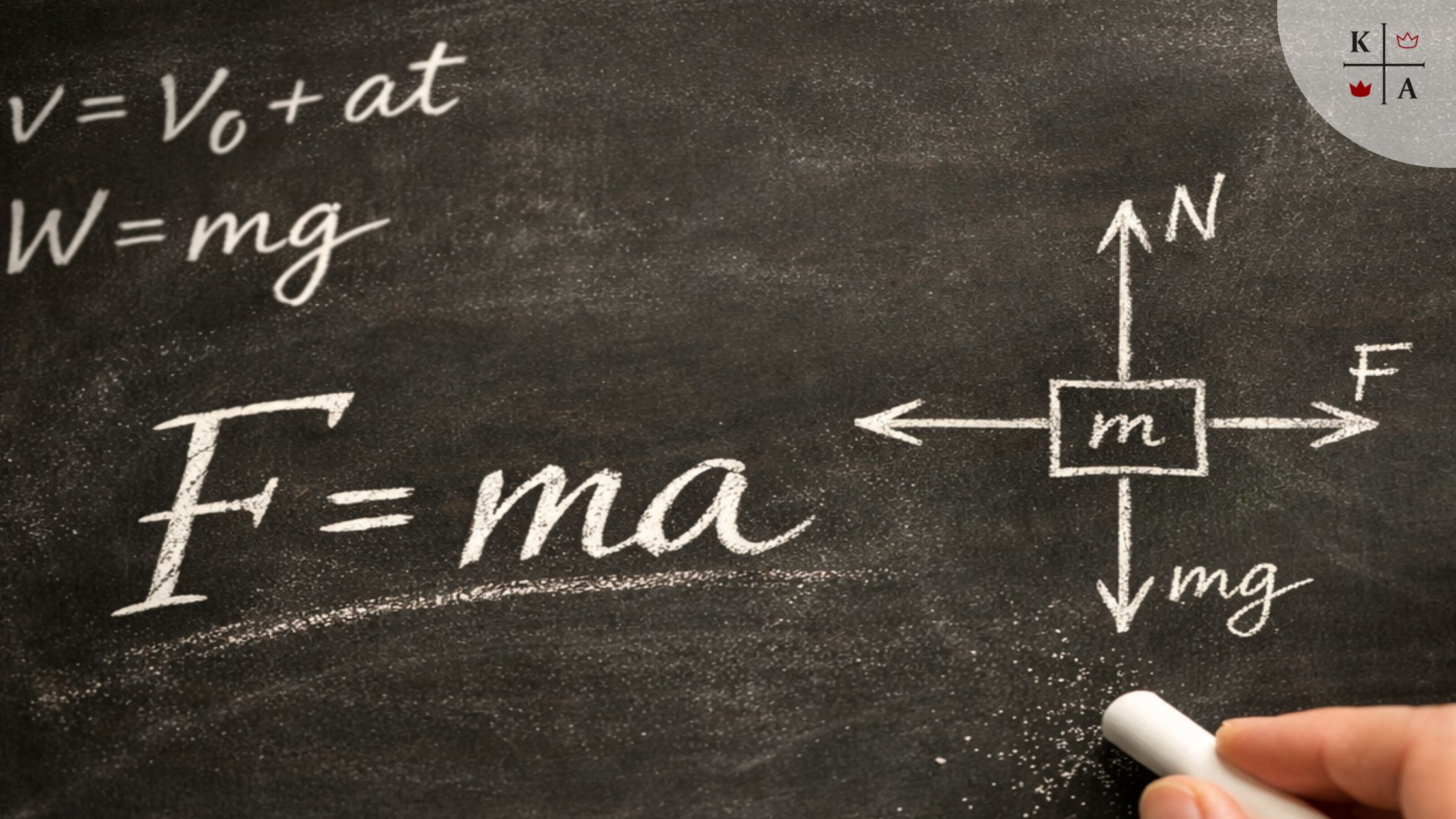
Kolbe’s approach to math and science is classical not because it relies heavily on explicit labels, but because it respects the nature of the disciplines themselves. Mathematics is taught as a cumulative language of reasoning. Science is taught as the careful and honest application of that language to reality. The result is a curriculum that is intentionally sequenced, rigorous without being arbitrary, and designed to support genuine understanding rather than superficial coverage.
This is why the relationship between math and science—and the sequencing of both—matters so much. Physics, in particular, cannot be meaningfully studied without the mathematical tools required to engage it. When students lack those tools, the subject becomes frustrating or abstract in the wrong way. When they have them, physics becomes intellectually coherent and deeply satisfying.
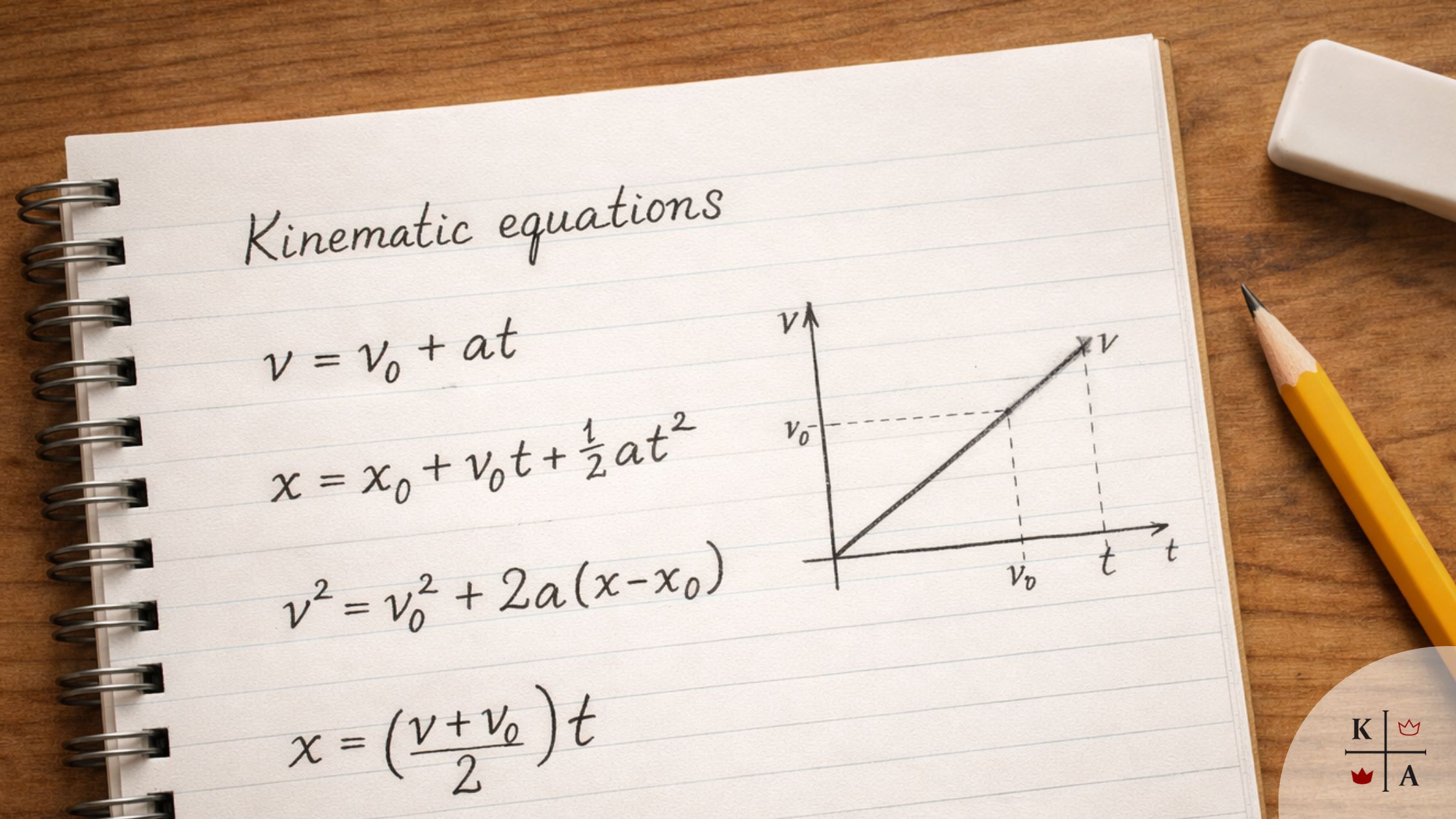
Kolbe’s science curriculum reflects this reality from the beginning. Students start with an Introduction to Physics and Chemistry that includes a co-requisite of Algebra I. As students learn to work with variables, equations, and proportional reasoning in mathematics, they immediately apply those skills to physical motion and chemical relationships. Math and science reinforce one another in real time, strengthening comprehension in both areas.
As students progress through the science sequence—Biology, then Chemistry, and finally Physics—mathematical expectations increase accordingly. The Physics curriculum requires completion of Geometry and Algebra II, with Precalculus completed or taken concurrently. These prerequisites are not intended to raise barriers, but to ensure that students are prepared to succeed. When students enter physics with the appropriate mathematical foundation, they are free to focus on reasoning, interpretation, and insight rather than struggling to keep pace with the calculations themselves.
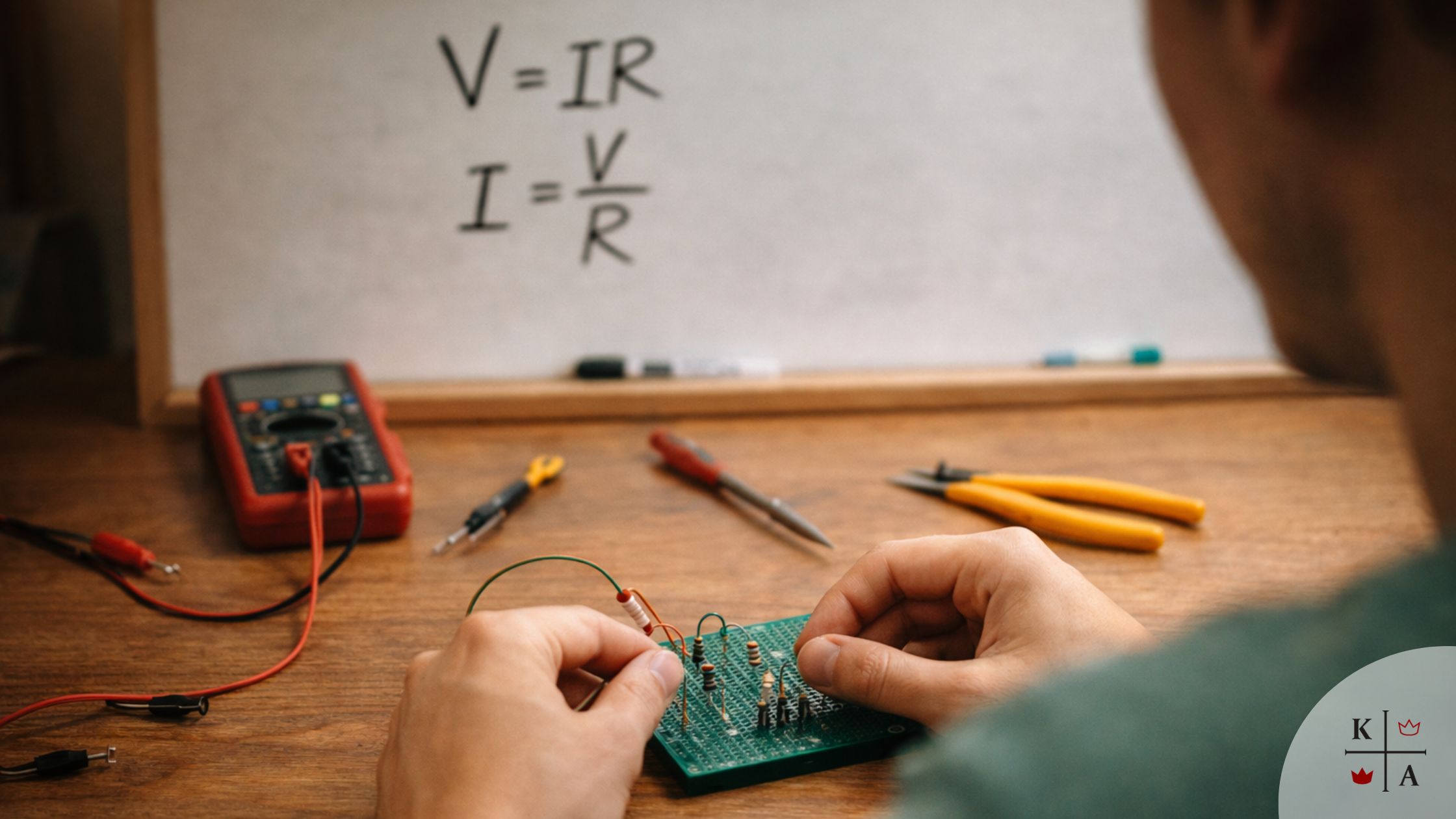
Within this framework, Kolbe’s Physics curriculum offers a comprehensive and intellectually serious study of the discipline. Core topics include measurement, motion in one and multiple dimensions, vectors, Newton’s Laws, forces, work and energy, momentum, rotational dynamics, equilibrium, gravity, oscillations and harmonic motion, waves and sound, interference, electricity, and circuits. For students seeking greater depth, the Honors curriculum extends into additional areas such as static equilibrium, fracture and elasticity, fluid dynamics, thermodynamics, and an introduction to relativity.
What distinguishes this curriculum is not only its scope, but the care with which it has been designed. Kolbe’s physics curriculum has been developed and refined through years of homeschool and classroom use, informing its pacing, sequencing, and emphasis on mathematical readiness. This experience ensures that the curriculum is not only rigorous, but practical and adaptable across a variety of educational settings.

Too often, science is taught as a purely technical subject, disconnected from meaning or wonder. Within a classical framework, physics retains its rightful place within the liberal arts. It trains students to reason clearly, to attend carefully to reality, and to recognize order in the natural world. Equations are not ends in themselves, but tools for seeing more clearly.
For homeschool families, Kolbe’s physics curriculum offers a coherent, demanding, and thoughtfully sequenced approach to science—one that respects students, honors the integrity of the discipline, and supports real intellectual formation. When math and science are taught together, in the right order and with appropriate expectations, students encounter physics not as an obstacle, but as one of the most powerful expressions of classical education.

Explore Kolbe’s physics curriculum!
Kolbe’s Physics Curriculum delivers a rigorous, mathematically grounded study of high school physics within a classical framework of order, rigor, and wonder. Designed to align with a strong math sequence and refined through years of homeschool and classroom use, this curriculum equips students to engage physics through disciplined reasoning and quantitative analysis.


