I have to begin with a shout-out to my mom who had the ideathat I should begin learning both Latin and Spanish in the elementary grades.Her ideals certainly required a lot of patience from her, as I can’t say I wasa particularly apt student in either of these subjects at the time; at anyrate, I remember many times when she had to wipe my tears of frustration oversomething I didn’t understand. Now, this might not sound like a particularlypromising opening to a post about the importance of learning language early butbear with me. It likely would have surprised my harried mother and fourth grademe to see my high-school self taking four (not just my curriculum’s requiredthree) years of Henle Latin and two years of completely optional Spanish. Fromthere, minoring in Spanish in college might not be a huge stretch, but becominga Latin teacher? Ten-year-old me would not have believed it.
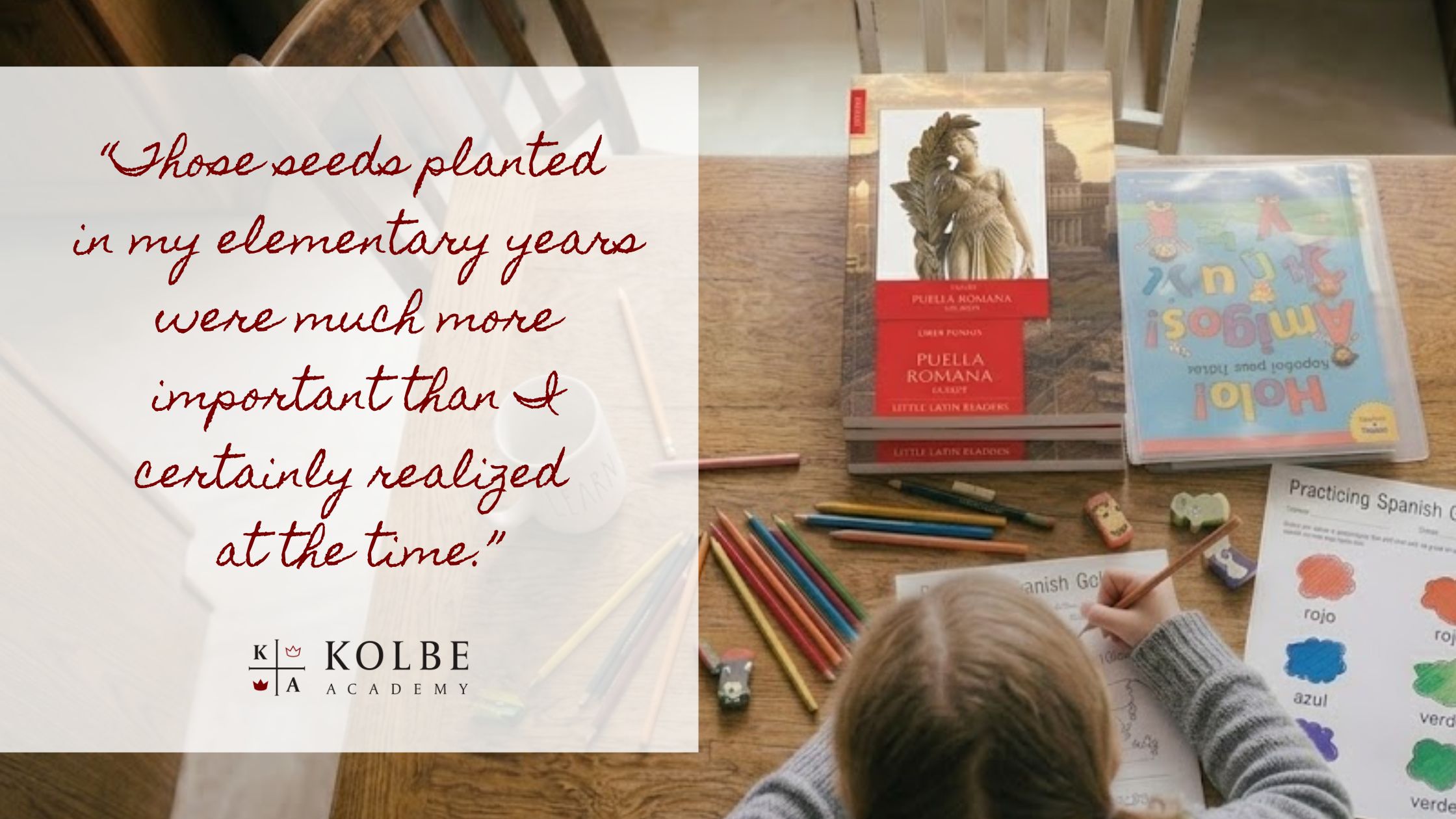
Those seeds planted in my elementary years were much moreimportant than I certainly realized at the time. As with so many subjects –particularly in a Catholic, classical education – the importance of learninglanguages isn’t just in whether a second grader remembers a particularvocabulary word or a fifth grader can recite the second declension nounendings. It’s more about painting the first brush strokes in the masterpiecethe soul will eventually become. The building blocks of my elementary languageeducation are mine now; they are there in my brain, ready to be picked up andput together when I am teaching a new lesson, learning a new Latin hymn forchoir, or dusting off my Spanish in hopes of improving my communication skills.I won’t belabor the point that it is much easier to learn a second language asa child rather than as an adult. My goal is simply to encourage you if you are,like my own mother, trying to take those steps toward helping your youngerstudents have an easier, more enriching experience of language later on inlife.
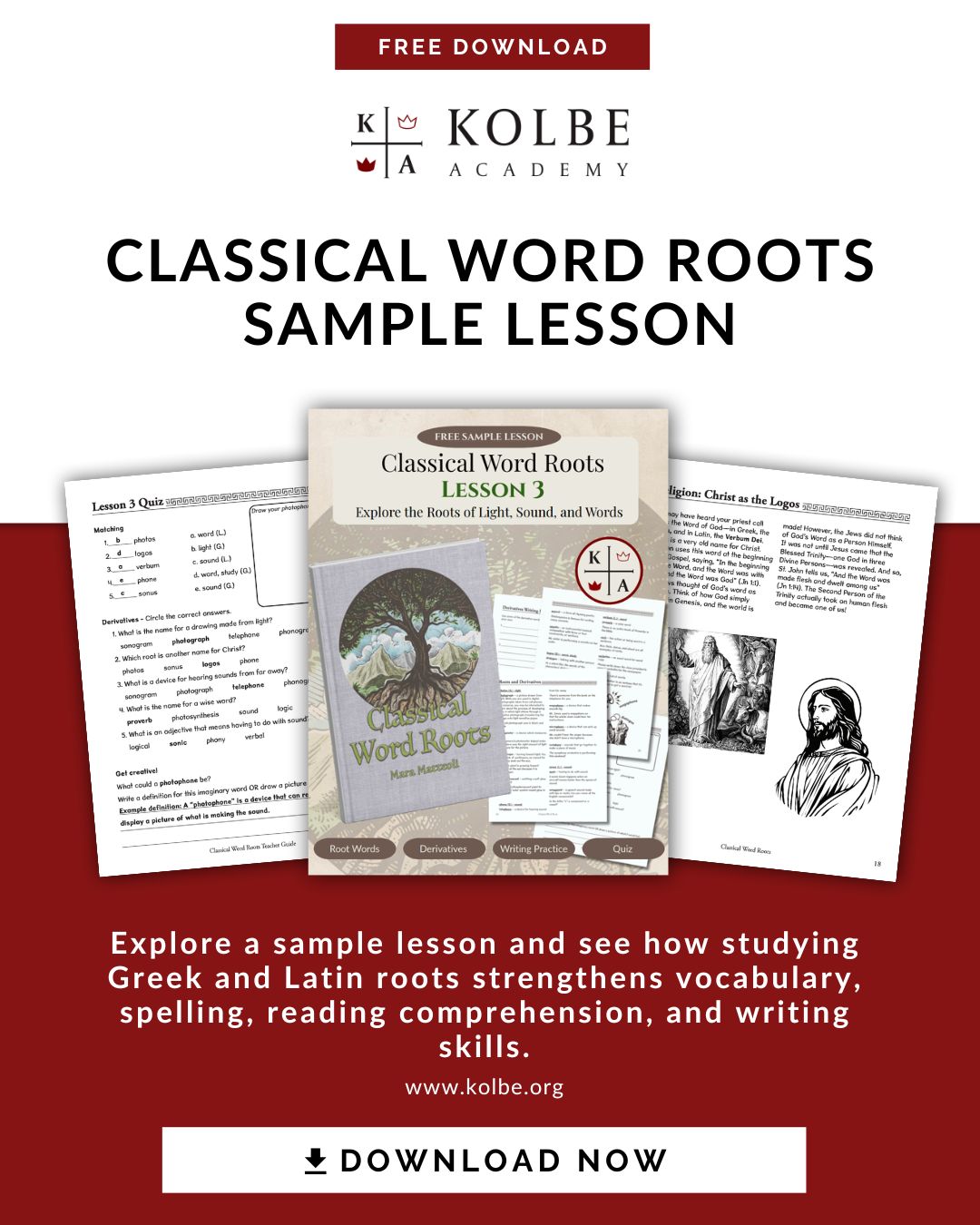
With this in mind, I’ll just briefly touch on the new andimproved Classical Word Roots course coming to Kolbe Academy next year.I have had the privilege of teaching our initial class on Greek and Latin rootsto our younger online students for two years now. As you may hear in ourKolbecast episode, the original book we used for the course left something tobe desired in terms of providing resources for engaging learning. When I setout to create our own version of this class, my goal was to provide a structurefor families to encounter the classical roots and their derivatives throughoutthe school week in a fun and gentle way. Consistency and exposure in a varietyof activities are key to instilling this sort of foundational knowledge that weseek. Repetitio mater studiorum as the saying goes (and yes, I rememberthat saying from my elementary Latin classes!). I am hopeful that this bookwill pique students’ curiosity about the origins of language and plant theirminds with seeds that will blossom, whether in their study of classicallanguages or in their understanding of the English language through Literatureand Grammar.