
What's New in Kolbe's Homeschool Course Plans?
When you're using a course plan every day, the little things matter. How easily can you find an assignment? Are the grading expectations clear? How much time does it take to organize the week's work?
These are some of the questions we're considering as we continue reviewing and updating Kolbe's homeschool course plans.
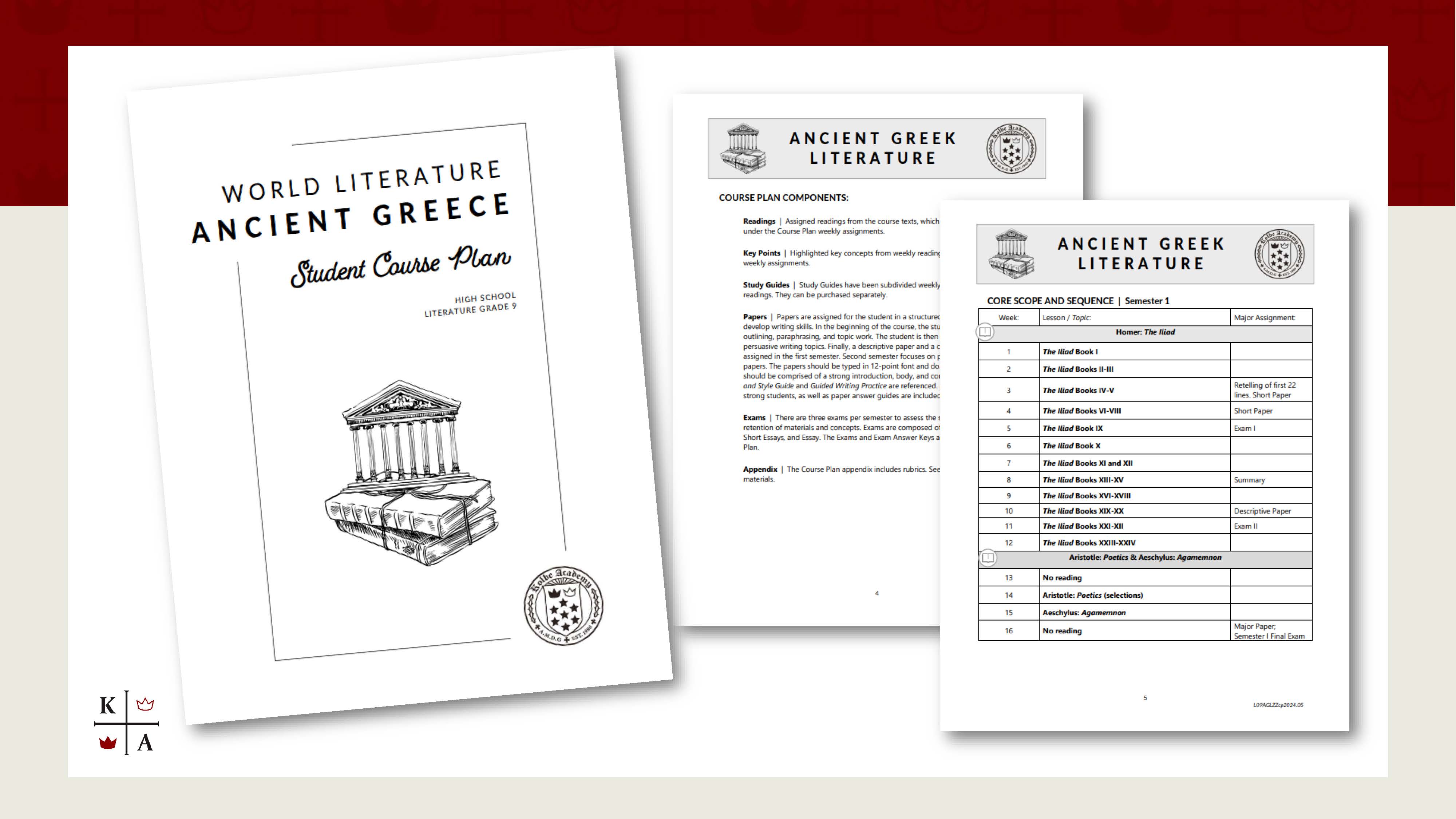
For decades, our course plans have helped families provide a rigorous classical, Catholic education at home. There's a lot that works well, and we want to preserve it. At the same time, we're always learning from the families and teachers who use our materials, and that experience helps us see where we can make things better.
Here's a look at some of the improvements we're making and what they mean for your homeschool.
Learning from Experience
Every course plan goes through a development process involving educators, subject specialists, writers, and editors. But we also learn a great deal once those materials are being used in homes and classrooms.
Parents may identify instructions that could be clearer or request more grading guidance. Teachers might suggest additional background information. Students' experiences can help us see where assignments would benefit from a different approach. We consider this feedback alongside our regular curriculum reviews, making adjustments that support both teaching and learning.
This work happens over time, one course at a time. Some plans need only minor updates, while others benefit from more extensive revisions. We also recognize that different subjects and grade levels call for different approaches. Our goal is to retain what serves families well while continuing to improve the materials where we can.
Taking Some of the Guesswork Out of Grading
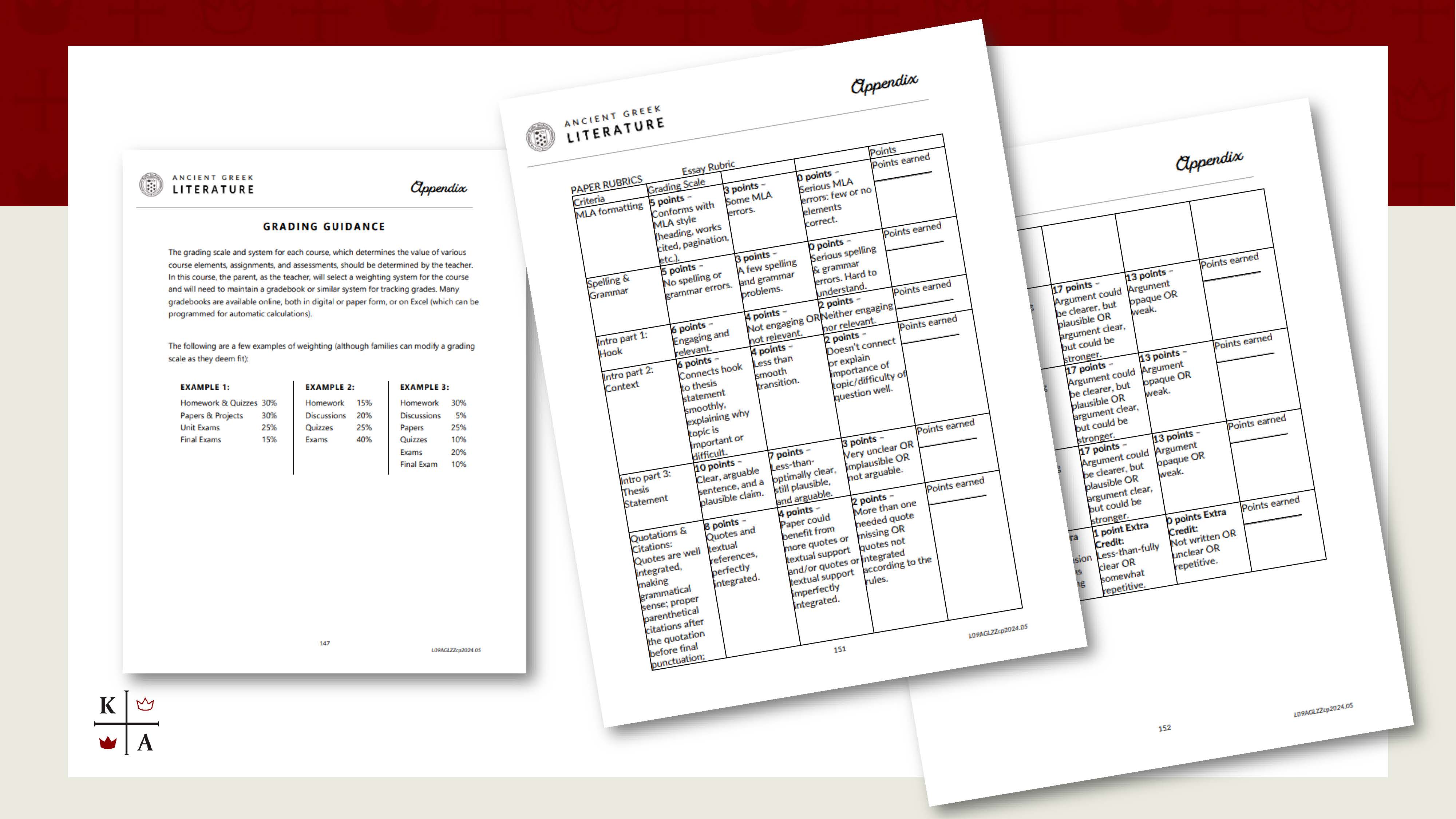
One area we're paying particular attention to is grading support, especially for writing assignments and projects. Evaluating an essay isn't always straightforward. You might recognize that a student has done good work, but how do you determine whether it meets the expectations for the assignment? What deserves the most attention in your feedback?
As we revise course plans, we're adding or refining grading guidance where it will be helpful, including writing rubrics and other assessment resources.
These tools give parents clearer criteria for evaluating student work and help students understand what's expected before they begin. They can also make conversations about grades more productive. Instead of focusing only on the final score, you and your student can look at specific strengths and areas for improvement.
Making Course Plans Easier to Navigate
If you've used several Kolbe course plans, you've probably noticed some differences in how they're organized. We're working toward a more consistent format, beginning with the syllabus. The opening pages of our course plans contain important information, including the course description, required texts, learning outcomes, and scope and sequence. High school plans also include information about grading, reporting, and course designations.
As plans are revised, we're organizing these sections more consistently so you'll know where to look for the information you need. We're also refreshing the overall layout, with cleaner formatting and improved readability. These may seem like small changes, but when you're teaching multiple subjects or working with several children, having materials that are easy to navigate makes a difference.
A Clearer Plan for Each Day
Another change we're introducing in more courses, particularly in high school humanities, is a daily breakdown of assignments. Many of our course plans have traditionally outlined work by week in high school, leaving parents to decide how to divide readings, exercises, and other assignments across individual days.
The weekly approach offers flexibility, but breaking everything down can take additional planning time. With the updated format, much of that work is already done. Students can see what's assigned each day, making it easier to organize their time and take greater responsibility for their coursework. Parents still have the freedom to adjust the schedule. If a reading takes longer than expected or a discussion is worth continuing into the next day, you can make that call. The daily breakdown simply provides a more detailed starting point.

Looking Ahead
Curriculum development is never really finished. There's always something to learn from teaching a course, and sometimes even a small adjustment can make a meaningful difference. We'll continue reviewing Kolbe's course plans, incorporating feedback, and making improvements as individual courses are updated.
Throughout that work, our commitment remains the same: providing families with academically strong, faithful Catholic curriculum and the resources to teach it well. We're grateful to the families and teachers who share their experiences with us. Your feedback is an important part of helping us make our materials better.
In the final article of this series, we'll turn our attention to something that doesn't always get enough attention: the formation of the parent-educator and the ways parents grow as educators alongside their children.
New to the series? Start with Part 1 to see how Kolbe’s Homeschool Course Plans help you build a classical, Catholic education at home.
Explore Kolbe's Homeschool Course Plans ➔


